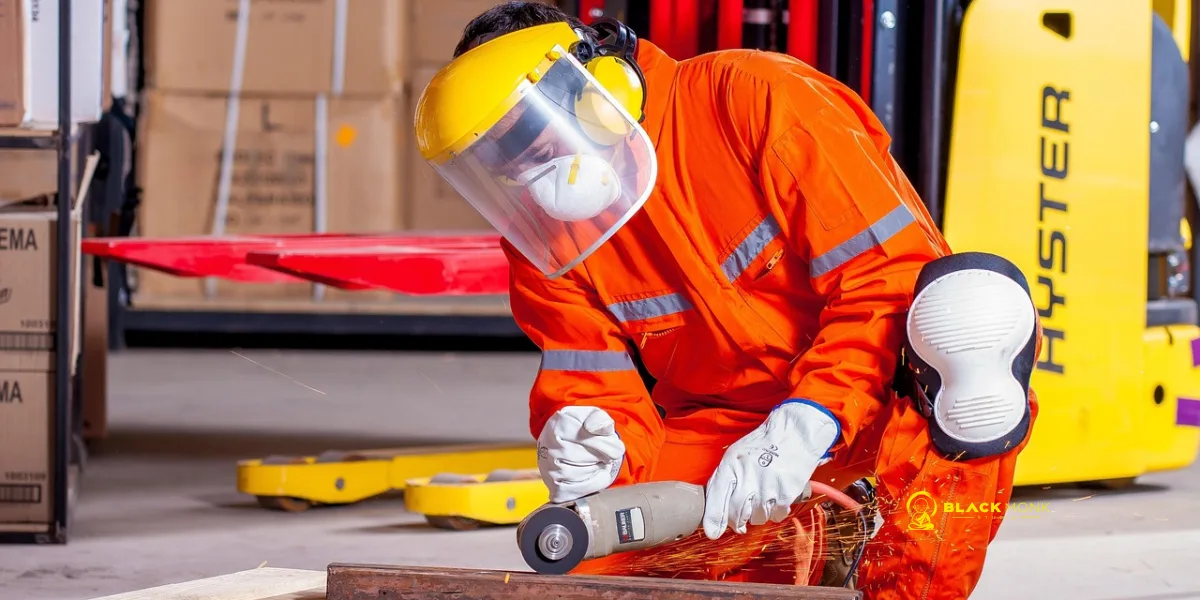
Content Marketing For Industrial Safety means publishing useful, accurate material that helps plant managers, safety officers and procurement teams solve real problems before they ever request a quote. Safety products and services are bought slowly, reviewed by several people and judged on trust, so a clear content plan can shorten the path from search to shortlist. In this guide I explain how I approach the work for industrial safety brands: who the readers are, what they search for, which formats earn attention and how to measure results honestly. The goal is simple. You will leave with a plan you can start this month.
Key takeaways
- Write for the people who carry risk: EHS managers, maintenance leads and procurement, each with different questions.
- Build content around compliance tasks, inspections and incident prevention, not around product launches alone.
- Review every technical claim with a qualified safety engineer before publishing.
- Measure qualified enquiries and sales conversations, not raw traffic.
Who Is Your Safety Content Actually For?
Industrial safety buying is rarely a single decision. A plant manager may care about downtime, an EHS (environment, health and safety) manager cares about audit findings, and a procurement team cares about approved suppliers and total cost. Before I write anything for a client, I map these roles and the question each one brings to a search engine.
The most useful exercise is to list the tasks behind a purchase. Examples include preparing for a site inspection, writing a risk assessment, choosing personal protective equipment for a new process or training workers on lockout tagout procedures. Each task creates searches, and each search is a chance to be the source a reader trusts.
This approach has limits. If your product only serves one narrow sector, such as gas detection for offshore platforms, your readers are fewer but more specialised. In that case, depth beats breadth, and a short list of expert articles will outperform a large blog.
Map roles to questions
- EHS manager: How do I pass an audit and document training?
- Maintenance lead: Which equipment needs inspection and how often?
- Procurement: What certifications should a supplier show?
- Plant director: What does an incident cost in lost production?
What Search Intent Means for Industrial Safety Keywords
Search intent is the reason behind a query. Someone typing a question such as how to perform a gas test is looking to learn, which is informational intent. Someone comparing fall protection suppliers is in a commercial investigation stage. Someone searching for a supplier near them with a quote request is ready to buy. Each stage needs a different page.
For this topic, I treat most top-of-funnel terms as informational and build practical guides for them. Mid-funnel terms, such as how to choose a safety light curtain supplier, need comparison criteria, checklists and clear notes on what the choice depends on. Bottom-of-funnel terms should lead to a product or service page with a direct contact route.
A common mistake is publishing commercial pages for informational searches. A reader looking for how a guard works will leave quickly if the page pushes a sales form in the first paragraph. Match the page to the reader's stage, then link forward.
| Stage | Typical query style | Best content format |
|---|---|---|
| Learn | How to test a confined space | Step-by-step guide |
| Compare | Fall arrest harness vs lanyard | Comparison article |
| Decide | Safety gloves supplier certification | Checklist or buyer guide |
| Buy | Request a quote for eye wash stations | Product or service page |
Choosing Topics That Show Real Field Knowledge
Good safety content starts from the field, not from a keyword tool alone. I ask the client's sales engineers and technicians which questions come up on site calls. Those questions are often more specific and more valuable than generic search volume data, and they reveal the language buyers use.
Strong topic families include compliance checklists, inspection schedules, incident case lessons written without identifying anyone, equipment selection guides and training explainers. Keep each article tied to a task a reader must complete. For example, a guide on preparing for a hazardous area inspection can cover documentation, labelling and common gaps, which an auditor may check.
Be careful with regulation. Standards and rules differ by country and sector, and they change. Where a topic touches law, I name the framework, link to the official source and advise readers to consult a qualified professional. For chemical handling, for instance, the European chemicals rules are explained by ECHA: understanding REACH, but whether a specific product complies is a question for a specialist.
Topic filter I use
- Does a reader need this to do a job or make a decision?
- Can our engineers answer it accurately and in writing?
- Does it lead naturally to one of our services or products?
- Is there a clear way to check whether the information is still current?
Formats That Work for Safety Buyers
Safety buyers read carefully and often print or share documents. Formats that respect this behaviour tend to perform well. Long-form guides, downloadable checklists, short explainer videos for training and comparison tables all have a place. The right mix depends on the sales cycle and the team's capacity to keep content current.
Technical white papers can earn links and trust, but they are expensive to produce and easy to let go stale. I often start with a shorter guide that answers one question well, then turn the strongest sections into a checklist. This keeps the first version accurate and gives the team a clear review path.
Video is useful for demonstrations, such as how to inspect a harness or fit a respirator, but only when a qualified person performs the task and the video explains limits. For video hosting and search basics, the YouTube Help pages cover upload and metadata settings.
- Step-by-step guides for procedures
- Printable checklists for inspections
- Comparison tables for equipment selection
- Short training explainers with a written summary
Writing Safety Content Without Overclaiming
Safety content carries higher stakes than most marketing. An unclear instruction or a claim that a product prevents all injuries can cause real harm and damage trust. I write with restraint: state the purpose, the steps, the limits and the source for each important point.
Use plain English. Explain each technical term the first time it appears, and avoid words such as guaranteed or fully compliant unless a certification body or regulator supports the statement. Advertising claims are governed by consumer protection rules, and the FTC: advertising and marketing guidance is a useful reference for the principles, even outside the United States.
A review process makes this practical. Assign one writer, one technical reviewer who understands the process, and one person who checks claims against the product documentation. Record the review date on each article so readers and search engines can see when it was last checked.
Red flags to remove before publishing
- Absolute promises like zero risk or always safe
- Procedures with missing steps or missing warnings
- Statistics without an official source
- Images of people working without protective equipment
Building Authority With Search and Structured Pages
Search engines need to understand what your page covers and whether it is helpful. Use a clear title, a descriptive heading structure and a short introduction that answers the question. Google's guidance on Google Search Central: helpful content is a good checklist for this stage.
Internal links help too. When a guide on inspection checklists links to a related article on equipment selection and then to a service page, readers can move through the process without hunting. Use descriptive anchor text, such as a guide to inspection checklists, rather than click here.
Technical health matters as well. Slow, unstable pages frustrate field staff who browse on phones in a plant. The web.dev: Core Web Vitals guide explains the speed and stability measures I track. Accessibility matters for workers using assistive tools, and the W3C: WCAG guidelines give a clear baseline.
Structured data can describe articles and organisations, but it does not replace good writing. Treat it as a supporting layer, and check the markup with official documentation from Schema.org.
Distribution: Reaching Safety Professionals Where They Talk
Publishing alone rarely reaches the people who need it. Safety professionals share articles through LinkedIn, professional associations, supplier newsletters and internal training channels. I plan distribution before the article goes live, so each piece has a clear route to its audience.
Email works well for existing customers and subscribers. Send a checklist with a short note explaining when to use it, not a sales pitch. For paid promotion, LinkedIn Marketing Solutions offers job-title targeting, which suits B2B safety content, though budgets and results depend on audience size and offer quality.
Community discussion also helps you learn. Practitioners in r/manufacturing talk about real plant problems, and reading those threads shows the vocabulary your readers use. Do not post promotional links there, and never invent quotes from members.
- Share the guide with a note on who should read it
- Turn one checklist into a short email series
- Answer questions in professional forums without links to sales pages
- Track which articles are shared by existing customers
How to Measure Content Marketing for Industrial Safety
Measurement should match the buying cycle. Page views and time on page tell you whether people find the content useful, but they do not show revenue. I track three layers: reach (search impressions and visits), engagement (scroll depth, downloads, return visits) and business outcomes (quote requests, sales calls, and deals where the first touch was an article).
Set up analytics before you publish. Google's Google Analytics Help pages explain how to configure events and conversions. Use Google Search Console to see which queries bring impressions and where pages rank, and review the list monthly.
Results depend on many factors: the depth of your catalogue, how long your sales cycle runs, how competitive the search terms are and how quickly your team responds to enquiries. There is no fixed timeline, and I avoid promising one. If a result is slow, check whether the page matches intent before changing the design.
A simple monthly review
- List the top queries and pages from Search Console.
- Check which pages led to enquiries or downloads.
- Update pages with outdated standards or broken links.
- Plan two or three new articles from questions sales received.
Questions & answers
What is content marketing for industrial safety?
Content marketing for industrial safety is the practice of publishing accurate, useful material that helps safety professionals solve job tasks, such as inspections, training and equipment selection. The aim is to be trusted before a buyer requests a quote. Good content answers specific questions, explains limits honestly and links to relevant products or services when a reader is ready to act.
How is safety content different from other B2B content?
Safety content carries higher stakes because a wrong instruction can cause injury. It must be reviewed by someone with technical knowledge, and claims need sources. Buyers also read slowly and share documents within their teams, so checklists and well-structured guides often work better than short promotional posts.
Which topics should an industrial safety brand cover first?
Start with the tasks your buyers perform every week, such as inspection routines, documentation for audits, and selecting protective equipment for a specific hazard. Ask your sales engineers which questions come up on calls. Those questions usually make better first topics than broad industry trends.
Do I need a technical expert to write safety articles?
Yes, in most cases. A writer can handle structure and clarity, but a qualified safety engineer or experienced technician should check procedures, terms and warnings. For anything involving legal compliance, a qualified professional should confirm the advice before it is published.
How long does it take to see results from safety content?
There is no fixed timeline, because it depends on how competitive the search terms are, how long your buying cycle runs and how much content you publish. Many teams see early search impressions first and enquiries later. Track progress monthly and avoid judging a page too soon.
Can I use LinkedIn to promote industrial safety content?
Yes. LinkedIn lets you share articles with professionals and, through LinkedIn Marketing Solutions, target by job title and industry. Keep the promotion useful, such as a checklist with a short explanation, and measure whether the audience reaches a qualified conversation rather than only counting clicks.
What metrics should I track for safety content marketing?
Track search impressions and rankings in Google Search Console, engagement such as downloads and return visits, and business outcomes such as quote requests and sales calls. Connect content to CRM records where possible, so you can see which articles appeared in the buyer's journey before a deal was won.
Is it safe to make claims about how a safety product protects workers?
Be cautious. Avoid absolute claims like preventing all injuries, and describe only what the product is certified or designed to do. Link to the certification body or manufacturer documentation, and state the conditions of use. Advertising rules apply, so review claims against official guidance before publishing.
Content marketing for industrial safety works when it respects the reader's job, uses accurate technical detail and gives a clear next step. Start with the tasks your buyers perform, review every procedure with a qualified person and measure enquiries rather than traffic alone. If you want help mapping topics, building a review process or connecting content to your sales pipeline, see our B2B industrial marketing page or our content marketing services.